Das KI-Register mit Superkräften
Ein zentrales KI-Register ist die Grundlage für effektive KI-Governance. Es bietet ein lebendiges System of Record für vollständige Transparenz über Ihre KI-Landschaft – von der Erkennung von KI-Assets bis zum Management über den gesamten KI-Lebenszyklus – und befähigt Teams, KI verantwortungsvoll und konform zu skalieren.
Überblick
Mit der zunehmenden KI-Nutzung in Unternehmen fällt es Organisationen oft schwer, den Überblick über ihre KI-Modelle, Anwendungsfälle (oder Use Cases), KI-Agenten und zugekauften Drittanbieter-Tools zu behalten. Erfahren Sie, warum ein zentrales KI-Register ein entscheidender erster Schritt für effektive KI-Governance ist – und wie Sie es mit Superkräften versehen können.
Wir beleuchten die zwei zentralen Herausforderungen: (1) Transparenz über Ihre KI-Landschaft gewinnen und (2) Assets richtig bewerten zu können – und zeigen, wie trail's automatisiertes, dynamisches KI-Register fragmentierte Verzeichnisse ersetzt, damit Sie sich mit Gewissheit auf Innovationsprojekte konzentrieren können.
Auf einen Blick:
Mit trail's Register kann Ihre Organisation:
- KI-Assets zentralisieren: Alle KI-Modelle, Systeme, Agenten und Drittanbieter / Lieferanten samt Abhängigkeiten in einem lebendigen Verzeichnis speichern und abbilden.
- KI-Erkennung automatisieren: Shadow AI sofort aus bestehenden GRC- und Entwickler-Tools oder Citizen-Development-Plattformen erfassen und synchronisieren.
- Ideen managen: Neue Use-Case-Ideen zentral bewerten, Governance-Anforderungen frühzeitig erkennen und Innovation beschleunigen.
- KI bewerten: Relevante Kontextinformationen und Daten automatisch abrufen für schnellere, präzisere Risikobewertungen.
- Governance mit Self-Serve skalieren: Fachbereiche mit standardisierten Workflows befähigen, um Engpässe in Compliance-Teams zu reduzieren.
- Workflows anpassen: Die richtigen Richtlinien, Kontrollen und Benachrichtigungen je Asset dynamisch auf Basis seines Risikoprofils zuordnen.
- KI-Anbieter steuern: Drittanbieter-KI-Risikomanagement nahtlos in Ihre interne Governance integrieren.
Warum brauchen Sie ein KI-Register? Und wie sieht ein gutes aus?
Problem 1: Transparenz in Ihrer Organisation gewinnen
Eine verlässliche Grundlage für die Governance schaffen
Um KI zu kontrollieren, müssen Sie sich zunächst eine Übersicht verschaffen. Das ist für die meisten Unternehmen die erste große Hürde. KI-Assets sind auf verschiedene Tools und voneinander getrennte Geschäftsbereiche oder Teams verteilt – oft noch in unübersichtlichen Excel-Tabellen oder Confluence-Seiten. Ohne eine zentrale Übersicht fehlt der Führungsebene die Transparenz darüber, welche KI-Projekte und Assets aktiv sind, wer sie verantwortet und wie ihr aktueller Governance-Status ist.
trail löst dies mit einem lebendigen, kontinuierlichen System of Record. Das KI-Register von trail erfasst und speichert alle relevanten Informationen zu Ihren KI-Modellen, Agenten, Systemen, Anwendungsfällen und Anbietern in einem zentralen und zugänglichen Verzeichnis. trail geht dabei über eine bloße Auflistung hinaus und visualisiert die komplexen Abhängigkeiten zwischen Assets – für einen vollständigen, vernetzten Überblick über Ihre KI-Landschaft und deren Compliance-Status.
KI-Assets erkennen
Neben der Sichtbarkeits-Herausforderung ist das bloße Auffinden und Erfassen von (Schatten-)KI eine enorme operative Belastung – die mit der wachsenden Zahl von KI-Agenten noch zunimmt. Informationen zu diesen Assets sind häufig in Legacy-Plattformen, Entwickler-Tools, Agent-Buildern oder isolierten Silos vergraben. Das manuelle Aufspüren nicht erfasster Systeme ist ineffizient und fehleranfällig.
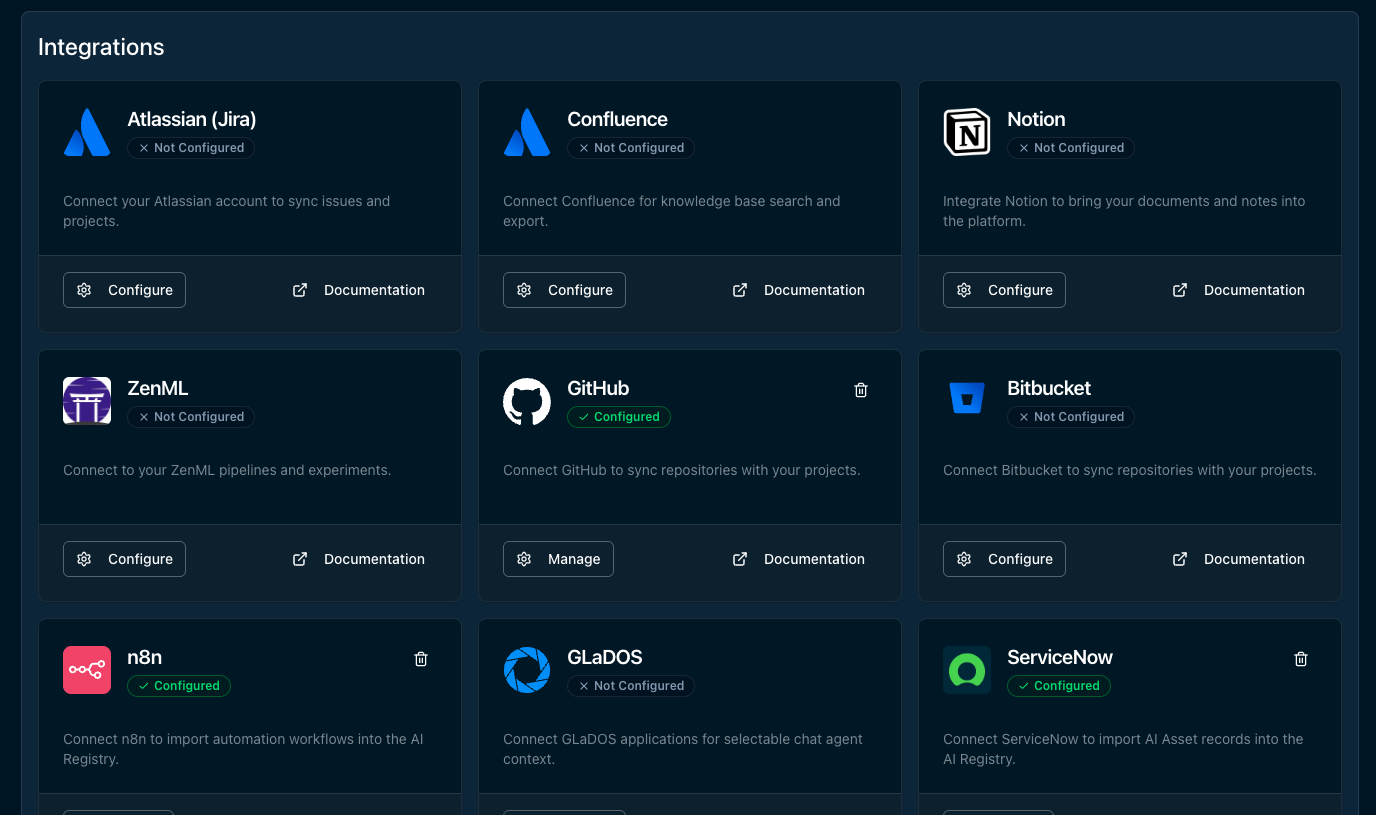
trail automatisiert diesen KI-Intake-Prozess durch Integrationen mit bestehenden Asset-Inventaren, GRC-Plattformen und den Umgebungen, in denen KI aktiv entwickelt wird (darunter Tools wie OneTrust, ServiceNow, Collibra, SAP LeanIX, Notion, Confluence, MLOps-Plattformen wie Databricks oder Agent-Builder wie Microsoft Copilot Studio oder n8n). Diese Verbindungen erkennen KI-Assets automatisch und überführen sie direkt ins Register. Bei Bedarf schreibt trail aktualisierte Governance-Daten auch zurück in Ihr bevorzugtes zentrales System of Record – ohne doppelte Dokumentation oder neue Silos.
Use-Case-Ideen managen
Effektive KI-Governance beginnt nicht erst beim Deployment oder im Beschaffungsprozess – sie beginnt bereits in der Ideenfindungsphase. Diese frühe Planungsphase prägt die künftigen Governance-Anforderungen und potenziellen Risiken entscheidend. Ohne einen strukturierten Prozess arbeiten Teams jedoch häufig in Silos, was zu fragmentierten Bewertungen, verzögerten Entscheidungen und potenziell doppelten Einträgen für ähnliche Ideen führt.
trail ermöglicht es Organisationen, neue KI-Ideen teamübergreifend strukturiert und transparent zu managen und zu bewerten. Durch die frühzeitige Erfassung potenzieller Risiken und Anforderungen werden doppelte Anfragen vermieden und Genehmigungen beschleunigt – etwa durch die Definition von Bedingungen für Fast-Track-KI-Deployments. Statt als Blocker zu wirken, wird diese frühzeitige Governance-Beteiligung zum echten Innovationstreiber.
Problem 2: Know Your AI
Die richtigen Informationen für Ihr KI-Assessment
Wenn Sie Ihre KI-Assets erfasst haben, ist der nächste Schritt deren Bewertung, um die notwendigen Governance-Anforderungen und Risiken zu ermitteln. Leider müssen Reviewerinnen und Reviewer diese Informationen häufig aus verstreuten Dokumenten, Code-Repositories, von externen Anbietern und von einzelnen Teams zusammensuchen. Diese manuelle Datenerhebung verzögert diese Bewertungen und damit auch die Freigabeprozesse für das KI-Deployment. Außerdem kann es zu unvollständigen Risikoprofilen führen.
trail ruft Asset-Daten automatisch ab und reichert sie für die Bewertungen an – all das aus bestehenden Tools, Repositories und anderen Quellen wie angehängten PDFs oder Konfigurationsdateien. Möglich wird das durch trail's Integrationen und den Einsatz von KI-Agenten. trail's Agent Flows sind dabei ein besonders leistungsstarkes Werkzeug, um die Relevanz gesammelter Quellen zu bewerten und Fragebögen sowie Asset-Karten zu befüllen.
Erfahren Sie, wie eine Person die Arbeit von fünf erledigen kann – mit Governance- und Compliance-Agenten.
Governance-Workflows für effektives Self-Serve standardisieren
Fehlende standardisierte Abläufe und Bewertungen führen häufig zu unvollständigen Daten in verschiedenen Abteilungen. Das Fehlen eines klaren Prozesses erzeugt zusätzlich Verwirrung bei den Teams aus den Fachbereichen (1. LoD). Da GRC-Teams typischerweise mit stark begrenzten Kapazitäten arbeiten, ist es unmöglich, jedes KI-Projekt manuell zu begleiten. Eine zentrale Herausforderung besteht darin, den Teams zu vermitteln, was sie wann zu tun haben.
trail's KI-Register erfasst nicht nur Assets, sondern bietet auch hilfreiche User Guidance – etwa durch die Empfehlung der richtigen standardisierten Assessments und Fragebögen für ein bestimmtes IT- oder KI-Asset.
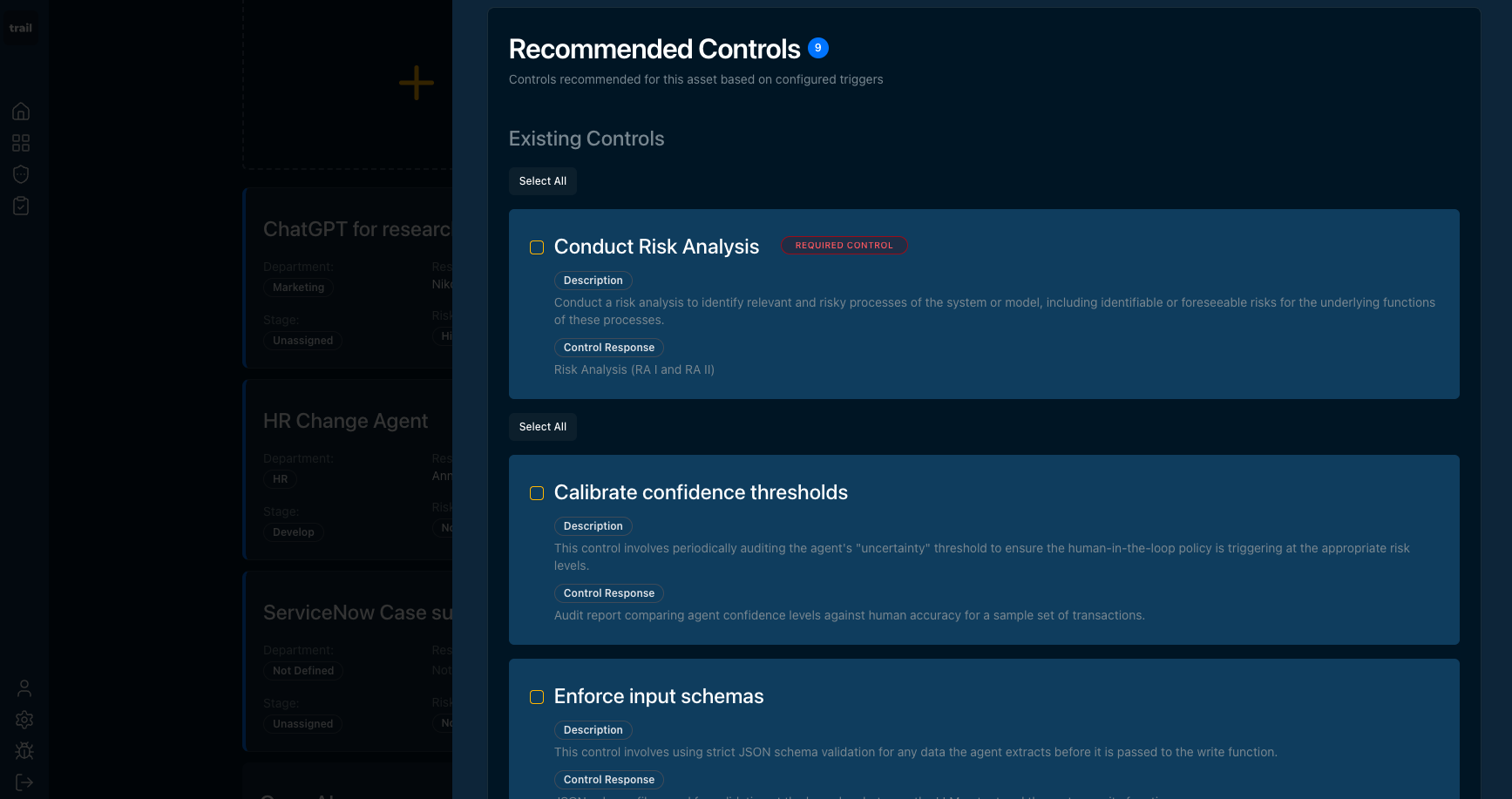
Darüber hinaus empfiehlt trail die passenden Governance-Anforderungen, die notwendigen Kontrollmaßnahmen sowie die zu mitigierenden Risiken – direkt aus der Asset-Karte, unterstützt durch Dashboards und trail's Agent Flows zur Automatisierung von kompletten Compliance-Prozessen.
Externe KI-Anbieter managen
Mit der Einführung von Drittanbieter-KI-Systemen sind Organisationen erheblichen Supply-Chain-Risiken ausgesetzt. trail integriert Lieferanten- und Drittanbieter-KI-Risikomanagement in Ihre KI-Governance – bereits im KI-Register. Es erfasst externe Anbieter zusammen mit internen Systemen, bildet Abhängigkeiten zwischen Assets ab und beschleunigt Anbieter-Bewertungen durch das Sammeln und Empfehlen relevanter Nachweise.
Erfahren Sie, was Drittanbieter-KI-Governance so herausfordernd macht – und wie trail Sie dabei unterstützt.
trail vs. der traditionelle Ansatz zum KI-Management
Wenn Organisationen manuelle Tabellen führen und fragmentierte Tools haben, wird der Bedarf an einem einheitlichen KI-Register mit leistungsstarken Automatisierungen deutlich. So unterscheidet sich trail vom traditionellen, isolierten Ansatz:
Bereit, Ihre KI-Landschaft zu kontrollieren?
Überwinden Sie fragmentierte Tabellen und zusammenhangslose Tools: trail bietet eine unternehmenstaugliche, hochgradig anpassbare KI-Governance-Software. Unsere Automatisierungen helfen Ihnen, den Fokus auf hochriskante KI-Fälle zurückzugewinnen. Kontaktieren Sie uns und erfahren Sie, wie trail Ihnen hilft, vertrauenswürdige, konforme und hochwertige KI zu entwickeln und zu nutzen.
FAQ
Was ist ein KI-Register und warum brauche ich eines?
Ein KI-Register (oder auch KI-Verzeichnis oder KI-Inventar) ist eine zentrale Sammlung aller KI-Assets Ihrer Organisation – Modelle, Agenten, Systeme, Anwendungsfälle und Drittanbieter. Ohne eines sind KI-Projekte über Teams und Tools verstreut, sodass die Führungsebene nicht weiß, welche KI-Systeme gerade laufen, wer diese verantwortet oder wie der Compliance-Status ist.
Welche Arten von KI-Assets kann ich in trail's Register verfolgen?
trail erfasst KI-Modelle, Agenten, Systeme, Use Cases und Drittanbieter in einem zentralen Hub und bildet die Abhängigkeiten zwischen diesen Assets ab.
Wie entdeckt trail KI-Assets automatisch?
trail integriert sich mit Ihren bestehenden Asset-Inventaren, GRC-Plattformen und Entwickler-Tools – darunter OneTrust, ServiceNow, Collibra, SAP LeanIX, Databricks und n8n. Diese Integrationen erkennen KI-Assets automatisch und beugt Shadow AI vor.
Kann trail Daten zurück in unsere bestehenden Systems of Record schreiben?
Ja! Bei Bedarf schreibt trail aktualisierte (Governance-)Daten zurück in Ihr bevorzugtes zentrales System, ohne neue Silos oder doppelte Dokumentation zu erzeugen.
Wann sollte Governance im KI-Lebenszyklus beginnen?
Governance sollte in der Ideenfindungsphase beginnen, nicht erst bei Deployment oder in der Beschaffung. trail ermöglicht es Teams, Use-Case-Ideen zentral einzureichen – Governance wird so zum Innovationstreiber statt zum Blocker.
Wie unterstützt trail bei Risikobewertungen?
trail ruft Asset-Daten automatisch ab und reichert sie an. Die Agent Flows können die Relevanz von Quellen bewerten, Fragebögen ausfüllen und Asset-Karten befüllen.
Wie unterstützt trail Teams, die keine Governance-Spezialisten sind?
trail empfiehlt die richtigen Assessments, Fragebögen, Governance-Anforderungen, Controls und Risiken direkt aus der Asset-Karte. Ziel ist, technische und Business-Teams (1. Line of Defense) zu befähigen, 80–90 % der Governance-Anforderungen eigenständig zu erfüllen.
Übernimmt trail Drittanbieter-KI-Risikomanagement?
Ja. trail erfasst externe Anbieter zusammen mit internen Systemen, bildet Abhängigkeiten ab und beschleunigt Anbieter-Bewertungen durch relevante Nachweise.
Worin unterscheidet sich trail von Excel oder unserem GRC-Tool?
Tabellen und klassische GRC-Tools erfordern manuelle Aktualisierungen und bieten kein Dependency-Mapping. trail bietet Live-Integrationen, automatisierte Erkennung, Versionskontrolle und Agent Flows – und ersetzt E-Mail-Threads durch eine einzige automatisierte Schicht.
Welche Compliance-Frameworks unterstützt trail?
trail unterstützt unter anderem den EU AI Act, ISO 42001 und NIST AI RMF und ordnet Richtlinien, Controls und Alerts jedem Asset auf Basis seines Risikoprofils zu. Sie können auch eigene Frameworks importieren und erstellen.